How to Build a Micro Brand That Attracts Dream Clients (Even With a Small Audience)
How To Create A Micro Brand That Stands Out And Gets Dream Clients
I’m going to show you how I’ve created a micro brand that generates multiple six figures every single year.
And more importantly…
I want to show you why I believe this matters now more than ever.
Because as we continue moving deeper into this age of AI, where everybody can create content, everybody can publish, everybody can have ChatGPT write their posts, and everybody can “look” like an expert…
The people who win are not going to be the people who simply create more noise.
The people who win are going to be the ones who become memorable.
The ones who stand for something.
The ones who have a sharper message, a stronger point of view, and a smaller room of people who actually trust them.
Because here’s what I really believe:
You don’t need more followers.
You don’t need to chase vanity metrics.
You don’t need to post 47 times a day.
You don’t need to DM every human being with a pulse.
And you definitely don’t need to keep doing more and more and more just because the internet told you that more volume is the answer.
From my experience, what you actually need is:
A sharper message
A stronger point of view
A specific painful problem you become known for
A content ecosystem that builds real trust
A mechanism that converts attention into clients
And a base of true fans who see you as the obvious choice
That, my friend, is how you build a micro brand.
And I believe this is one of the most important things a coach, consultant, or expert can build in 2026 and beyond.
Why More Followers Are Not The Answer
Most people are still playing the wrong game.
They’re chasing more leads.
More followers.
More views.
More comments.
More DMs.
More ads.
More reach.
More everything.
But then they look at their business and they’re still not getting enough quality buyers.
They might have leads coming in.
They might have posts that pop off.
They might even have viral content.
But the business still feels inconsistent.
The sales calls are hit or miss.
The leads are low quality.
The audience is watching, but not really buying.
And that is a very different problem.
I have a client I do fractional work for in the health coaching space. She gets a lot of leads. Like, lead flow is not necessarily the issue.
She has ads running.
She has posts that go viral from time to time.
She has plenty of attention.
And she’s doing pretty good. She’s generating anywhere from $15K to $40K per month.
But it’s all over the place.
Some months are good.
Some months are frustrating.
And the big issue is that the leads are not consistently converting into booked calls. Or, when they do book, the quality is not always there.
So on the surface, you could look at that and say:
“Well, she just needs more leads.”
But that’s not actually the problem.
She already has leads.
The real problem is that the messaging is attracting too many of the wrong people and not enough of the right people with real buying intent.
And this is where so many coaches get stuck.
They think the answer is more volume.
More ads.
More content.
More DMs.
More funnels.
More hacks.
But if your message is generic, more volume just amplifies the wrong problem.
You don’t just want more human beings.
You want the right human beings.
Because the internet is flooded.
And more noise is not the answer.
The Better Game: Go Deeper With Fewer People
The better game, in my opinion, is not to be known by everybody.
It’s to become unavoidable to the right people.
It’s to go deeper with a smaller group of humans who actually care about the problem you solve.
This is where the concept of 1,000 true fans comes in.
I first learned about this idea from Kevin Kelly. He wrote an article years ago about how artists, musicians, and creators didn’t necessarily need millions of fans to make a sustainable living.
They needed 1,000 true fans.
People who loved what they did.
People who would buy their work.
People who would show up again and again.
People who weren’t just casually aware of them, but were deeply connected to their message, their work, and their world.
And I believe this is more true now than ever.
Especially for coaches, consultants, and experts.
Because if you sell a high-ticket coaching program, consulting offer, mastermind, membership, or service…
Can you imagine having 1,000 true fans?
Seriously.
Can you imagine having 1,000 people who deeply trust you?
1,000 people who read your emails?
1,000 people who watch your videos?
1,000 people who believe in your point of view?
1,000 people who would seriously consider buying almost anything you put out because they already trust your work?
That changes everything.
You don’t need a million followers.
You don’t even need 100,000 followers.
For a lot of you, you don’t even need 10,000 followers.
If you had 1,000 of the right people who truly saw you as the go-to person for the specific problem you solve, your business would look completely different.
And yes, maybe for your model you want 3,000 true fans.
Or 5,000.
Or 10,000.
That’s fine.
You can scale the idea.
But the base concept is the same.
You want a group of people who are deeply connected to your message, your story, your point of view, and your solution.
Because once you have that, you have demand.
What Happens When You Actually Have Demand
When you have demand, everything changes.
Let’s say you’re trying to fill your coaching program with 100 clients.
And let’s say you actually do it.
Now, all of a sudden, you have a different kind of problem.
You need to hire.
You need to systematize.
You need to improve delivery.
You need to build infrastructure.
But that is a way better problem than waking up every day wondering where the next client is coming from.
When you have real demand, you’re no longer chasing clients.
You’re no longer emotionally attached to every DM.
You’re no longer hoping some random post saves your business.
You start to become sought after.
And that changes the way you show up.
It changes your emotional state.
It changes your confidence.
It changes how your audience perceives you.
Because there is a very different energy between someone who is desperate for clients and someone who is clearly in demand.
And that’s what a micro brand helps create.
The Three Things A Micro Brand Gives You
A strong micro brand gives you three major things:
1. Trust
People feel like they know you.
They understand what you stand for.
They’ve heard your stories.
They’ve seen your consistency.
They know your point of view.
They associate you with a specific problem and solution.
And because of that, trust builds faster.
2. Depth
Instead of being a shallow voice in a giant market, you become a deep voice in a specific room.
You are not trying to be everything to everyone.
You are going deeper into one problem, one person, one transformation, and one belief system.
That depth makes you more memorable.
3. The Perception Of Demand
When people see that others trust you, refer to you, talk about you, attend your workshops, respond to your ideas, and buy from you…
You start to become perceived as someone who is in demand.
And perception matters.
Because people want to work with people who feel trusted, clear, and sought after.
A micro brand can give you easier referrals.
Stronger trust.
Better clients.
More buying intent.
And a much cleaner path to becoming the obvious choice.
A Micro Brand Is Not Just A Smaller Brand
This is important.
A micro brand is not just a small brand.
It’s not just having a smaller audience.
I know people with 20,000 followers who have a much stronger business than people with 200,000 followers because they have the right people paying attention.
A micro brand is not necessarily about being tiny.
It’s about being sharper.
It helps you carve out your own sub-niche.
It helps you stand for something clear.
It helps the right people remember you when they are ready to buy.
That’s the goal.
Not just reach.
Memory.
Not just attention.
Trust.
Not just content.
Demand.
You want your market to be able to say:
“Oh, that’s the person who helps with ______.”
That is what you’re trying to create.
How I Discovered This Building My Gym
I first really discovered this when I was building my gym.
At the time, I was in South Florida and there were Orange Theories, Nine Rounds, Fit Body Boot Camps, LA Fitnesses, big box gyms, and all kinds of fitness options around me.
Everybody was trying to be the place to work out.
And I was having a hard time getting clients.
At the time, I was just running a regular outdoor boot camp.
Nothing crazy.
Nothing that different.
And I remember thinking:
“Man, I need to create something different.”
So I started asking myself:
“What if there is a select group of people in South Florida who want outdoor training, but they also want gym equipment?”
They didn’t want to be trapped inside a big box gym.
But they also didn’t want to just do random bodyweight workouts in a park.
They wanted the best of both worlds.
And that idea became an outdoor fitness center.
Long story short, I built an outdoor gym with tons of equipment outside.
It was different.
It was memorable.
It stood out.
And we built that gym up to around 300 members.
Thousands of people came through it over the years.
And that was one of my first real experiences of building a micro brand.
It was not just another gym.
It was not just another boot camp.
It was a specific concept for a specific kind of person who wanted something different.
That’s what made it powerful.
How I Became “The Stubborn Fat Ninja Warrior Guy”
I discovered the same thing again when I became an online fitness coach around 2018 and 2019.
At that time, there were already a ton of online fitness coaches.
And then COVID happened and it felt like every person on planet earth became an online coach overnight.
The market got flooded fast.
But I remember one specific moment that showed me how powerful positioning and memory really are.
I was on the phone with a prospect.
And in the background, her husband said:
“Hey honey, who are you on the phone with?”
And she said:
“I’m on the phone with that stubborn fat Ninja Warrior guy.”
And that hit me.
Because that was the perception people had of me.
I wasn’t just another weight loss coach.
I was the stubborn belly fat guy.
And I also had this story of training for American Ninja Warrior.
I had a specific person I was speaking to.
I had a specific painful problem I was known for.
I had a strong point of view.
I had a persona that people remembered.
That is a micro brand.
And I’ve repeated this formula multiple times across different offers over the years.
The niche changes.
The offer changes.
The market changes.
But the principles stay the same.
The 4M Micro Brand Framework
Here is the framework I want you to get from this.
I call it the 4M Micro Brand Framework.
If you want to build a micro brand that stands out and gets dream clients, you need four things:
Message
Media
Mechanism
Machine
In a nutshell:
You need to say the right words, in the right way, dare I say in the right order, to the right people.
Then you need to plug those words into the right media ecosystem.
Then you need a mechanism that converts attention into clients.
And then you need a machine that makes the whole thing repeatable.
Let’s break this down.
M #1: Message
Your message is the words you use in your content, ads, marketing, emails, workshops, videos, and sales process to attract clients.
And most people have one of two problems with their message.
Problem #1: Their Message Is Too Generic
This is where people attract leads, but not the right leads.
I was reviewing a health coach’s Instagram content recently.
He had a video do around 1.2 million views.
He had something like 900 comments.
He had DMs coming in.
On the surface, you would think:
“Dude, this guy must be crushing it.”
But he told me:
“I’ve signed zero clients from this.”
And I was like:
“Right.”
Because the content was so generic that it attracted a massive audience, but finding his ideal client inside that audience was like finding a needle in a haystack.
So now he’s burning out trying to DM all these people who were never really ideal buyers in the first place.
That’s what generic content does.
It can get attention.
It can get views.
It can get comments.
But it does not automatically create demand.
Problem #2: They Are Just Teaching At People
The second issue is that most coaches are just teaching.
They’re sharing tips.
They’re giving information.
They’re posting educational content.
And listen, education can be valuable.
But if all you do is teach at people, you become commoditized.
Because everybody is teaching.
Everybody has tips.
Everybody has a carousel.
Everybody has a how-to post.
Everybody can now ask AI to create “10 tips for weight loss” or “5 ways to grow your business.”
So if your content is just information, it becomes forgettable.
The goal is not just to teach.
The goal is to shift beliefs.
That’s where influence happens.
Megaphone Messaging Vs. Dog Whistle Messaging
I want you to imagine you are standing in a crowded marketplace.
You have a megaphone.
And you’re yelling out:
“Hey everybody, I can help you lose weight!”
Or:
“Hey everybody, I can help you grow your business!”
Maybe a few people turn their heads.
Maybe some people walk over to your booth.
But there are a bunch of other people yelling the same thing.
That is what most people’s messaging sounds like.
It’s loud.
It’s broad.
It’s generic.
Now imagine instead of a megaphone, you had a dog whistle.
When you blow a dog whistle, not everybody turns.
Only the ones meant to hear it do.
That is what your messaging should do.
It should call in the right people and repel or ignore the wrong people.
That is dog whistle messaging.
If your message is generic, your brand will disappear.
If your message is specific, the right people start to feel like:
“Wait… this person is talking directly to me.”
The Three Things A Strong Message Gets Right
A strong message usually gets at least three things right.
1. The Person
Who exactly are you for?
And I don’t mean some generic avatar like:
“Busy professionals.”
Or:
“Online coaches.”
Or:
“Women who want to lose weight.”
That is still too broad.
You want to think about your dream client.
Who is the specific person you want to be known for helping?
What stage are they in?
What do they already believe?
What have they already tried?
What are they frustrated by?
What kind of language do they use?
What do they secretly want?
This is where you start to create your own sub-niche.
2. The Problem
What painful issue do they want solved?
And I want to be clear.
Don’t just say “confidence.”
Don’t just say “health.”
Don’t just say “growth.”
No.
What is the painful problem?
For my fitness business, it was stubborn belly fat.
Not just weight loss.
Stubborn belly fat.
The fat they couldn’t seem to lose no matter what they tried.
No matter how much money they spent on diets.
No matter how many workouts they did.
No matter how many times they tried to “eat healthy.”
That was painful.
In my current work, I talk a lot about helping coaches create pre-sold clients.
Because there are a lot of coaches who have followers, leads, attention, and content…
But the audience is not buying.
That is painful.
They don’t just want more content.
They want their words to create demand.
That’s a real problem.
3. Your Point Of View
What do you believe that challenges the market?
This matters a lot right now.
Because we have ChatGPT.
We have Claude.
We have AI tools everywhere.
And a lot of people are using AI to do their thinking for them.
So they don’t actually have strong opinions.
They don’t have a real point of view.
They don’t have a belief system.
They’re just repeating the same stuff everyone else is saying.
But when you have a strong point of view, you start to stand out.
You become more memorable.
People may not always agree with you, but they know what you stand for.
And that is powerful.
Your Story Makes The Message Stick
Your story is also part of your message.
That’s why the “stubborn fat Ninja Warrior guy” thing worked.
It wasn’t just the problem.
It was also the story.
I had this background of training for American Ninja Warrior.
I had the fitness transformation angle.
I had a specific person I was speaking to.
I had a point of view around stubborn fat.
All of that combined created memory.
And memory matters.
Because people don’t buy from the person they barely remember.
They buy from the person who keeps showing up in their mind as the solution.
Generic Message Vs. Stronger Message
A generic message sounds like:
“I help coaches grow online.”
That might be true.
But it is forgettable.
A stronger message sounds like:
“I help established coaches become the go-to expert in their sub-niche so dream clients come pre-sold.”
That is much better.
It tells me who it’s for.
It tells me the outcome.
It tells me the positioning.
It tells me the deeper desire.
And it starts to separate you from everyone else saying, “I help coaches grow.”
Own One Painful Problem
Do not try to be known for everything in your niche.
This is a huge mistake good coaches make.
Because if you are a good coach, you probably can help people with a lot of things.
And because you can help with a lot of things, you try to talk about all of them.
But that makes your brand harder to remember.
You want to own one issue so deeply that people associate you with the solution.
You want people to say:
“Oh, she helps with emotional eating.”
“Oh, he helps with stubborn belly fat.”
“Oh, she helps nurses launch IV therapy businesses.”
“Oh, he helps coaches make content that converts.”
“Oh, he helps with influence and messaging.”
That’s what you want.
You want to create memory.
And memory creates trust.
And trust creates demand.
Repetition Builds The Brand
I repeat the same core ideas over and over again.
I’ll say things like:
Dream clients watch your content but they’re not buying.
Your message is too generic.
You’re teaching too much.
You need to shift beliefs.
Your content is attracting the wrong people.
Your sales calls require too much convincing.
You don’t need more followers, you need stronger resonance.
I repeat these ideas because I want to own that problem.
I want people to associate me with that specific issue.
That’s what you need to think about.
What is the painful problem you can own?
What is the idea you want people to connect to your name?
What is the thing your market should remember you for?
M #2: Media
The second M is Media.
This is where you take your message and plug it into a content ecosystem that builds know, like, and trust.
And the best micro brand content is not random education.
It is your same belief-shifting message repeated through different angles, stories, examples, and formats.
Your content should do three jobs.
1. Attract The Right Attention
You need to say something specific enough that the right people stop scrolling.
Not just anybody.
The right people.
Again, I’ve mentioned examples of people getting millions of views, hundreds of comments, and tons of DMs…
But not converting clients.
So attention alone is not the goal.
The right attention is the goal.
That’s why dog whistle messaging matters.
You want your content to make your dream client feel like:
“That is exactly what I’m dealing with.”
2. Build Trust
You build trust with stories, client stories, social proof, insights, and belief-shifting teaching.
But trust is not just built by saying:
“Here’s how to do a squat.”
That kind of content is everywhere.
It’s commoditized.
A better way is to teach insights.
For example, when I was running my fitness business, one of the things I would say was:
“It’s not about eating healthy. It’s about eating right.”
That is an insight.
Then I could explain what it meant.
Now I’m not just giving people another food tip.
I’m shifting how they think.
Today, I talk about how it’s not just about teaching your audience.
It’s about influencing.
It’s about shifting beliefs.
It’s about helping people see the problem, the solution, and themselves differently.
That gives people a new insight.
And insight deepens buy-in.
3. Drive The Next Step
Your content should lead somewhere.
Most people use Instagram, Facebook, or LinkedIn purely as top-of-funnel platforms.
And sure, that can work, especially if you are newer.
But if you want to build a sustainable business, you need to move interested people into the middle of your funnel.
You need to move them into your mechanism.
Because content alone is not the business.
Content should create attention and trust.
But then that attention needs to move somewhere.
M #3: Mechanism
The third M is Mechanism.
This is how you convert attention into clients.
For me, one of the best mechanisms is workshops and masterclasses.
Especially if you’re trying to build a micro brand.
Why?
Because workshops and masterclasses let people experience your thinking at a deeper level.
They get more exposure to you.
They hear your stories.
They see your frameworks.
They experience your point of view.
They feel part of something.
And when done correctly, your mechanism moves people from interested to pre-sold.
That is the key.
A micro brand needs one clear mechanism that helps people shift beliefs before they hear the offer.
Most people are trying to go straight from content to the offer.
They post something.
Someone likes it.
They DM them.
They try to sell.
And that can work, but it becomes much harder at scale.
The better flow is:
Content creates attention.
Conversation creates context.
The mechanism shifts beliefs.
Then the offer becomes the obvious next step.
That mechanism could be:
A live workshop
A masterclass
A strong VSL
A challenge
A webinar
A live training
A conversion event
But it needs to exist.
Because attention alone does not create clients.
Belief shift creates clients.
Why Workshops Work So Well
I personally like workshops the best.
Especially live workshops on Zoom.
Because you get your best leads and prospects in the same room.
They get to experience your energy.
They get to hear your ideas.
You can have back-and-forth banter.
You can answer questions.
You can create community.
It’s very different from someone casually watching one of your Instagram reels.
A live workshop can build connection fast.
And when you do it well, it helps solidify true fans.
It brings people deeper into your world.
What A Good Workshop Or Masterclass Should Do
A good workshop, masterclass, or VSL should sell people on a new belief system.
You are not just giving them information.
You are helping them believe something new.
There are a few major beliefs you want to shift.
Sell Them On A New Identity
You want them to believe a new identity is possible.
If they see themselves as the overweight parent who never follows through, you want to help them believe they can become the fit parent.
If they see themselves as the coach whose audience watches but doesn’t buy, you want to help them believe they can become the in-demand expert whose dream clients come pre-sold.
People need to buy into who they are becoming.
Sell Them On A Unique Solution
They also need to believe in your unique way of solving the problem.
In my fitness business, that may have been my stubborn fat solution.
In my current business, that may be Magic Messaging or the Micro Brand Framework.
The point is, they need to see that your way is different from the way they’ve been trying to solve the problem.
Because if they believe your solution is the same as everything else, they’ll treat you like a commodity.
Sell Them On Social Proof
They need to believe other people like them have done it.
They need to see that the transformation is possible.
And one of the best ways to do this is through stories.
Your stories.
Client stories.
Market stories.
Proof stories.
Because stories make beliefs easier to absorb.
This is where your brand stops being just content and starts becoming an actual business.
You start creating a conveyor belt that moves people from attention to trust to demand to conversion.
Whether you sell through calls, a sales page, workshops, or masterclasses, the principle is the same.
You need a mechanism that moves people.
M #4: Machine
The fourth M is Machine.
This is how you make everything repeatable.
Depending on your business model, this can look different.
But at minimum, you need KPIs and systems.
Because if you don’t know your numbers, how do you know what to do?
When I talk about 1,000 true fans, I’m not just pulling that number out of nowhere.
You need to know your business math.
How many people need to attend your masterclass?
How many people need to book calls?
How many people need to close?
How many leads need to enter the system?
How much content needs to be published?
How many conversations need to happen?
Knowing your KPIs is critical.
And again, it might look different depending on your model, but the principle is the same.
Business Is Like Fitness
I look at this like fitness.
If I’m trying to get fit, I track my macros.
I know what I’m eating.
I track my workouts.
I track my sets.
My reps.
The weight I’m using.
The more clearly I track, the faster I can improve.
Business is the same.
If you’re trying to grow a business without tracking your KPIs, you’re probably not being serious enough about the business.
I’m just being honest.
You cannot build a predictable machine if you don’t know the numbers.
What The Machine Includes
Your machine includes things like:
Your Content Cadence
How often are you publishing?
Where are you publishing?
What is your rhythm across Instagram, Facebook, YouTube, email, LinkedIn, or wherever your media ecosystem lives?
Your Lead Flow
How many interested leads are entering the process?
Where are they coming from?
What content or CTA is creating the most interest?
Your Middle-Of-Funnel Movement
When someone enters your world, how do they move deeper?
Do they watch your YouTube videos?
Join your email list?
Attend your workshop?
Watch your VSL?
Read your case studies?
How do you systematically get them to consume belief-shifting content?
Your Conversion KPIs
How many people register for the workshop?
How many attend?
How many book calls?
How many buy?
How many no-show?
How many need follow-up?
These numbers matter.
Your Follow-Up System
Most people are either buying or dying inside your CRM.
They come in.
They don’t buy right away.
And then nothing really happens.
That is a huge leak.
A very small percentage of people are ready to buy immediately.
There’s that classic sales pyramid idea where around 3% of people are ready to buy now.
Then another group is gathering information.
Another group is problem-aware but not actively solving it yet.
And a large portion of the market is not even fully problem-aware.
So you need a system that keeps people in your world.
Emails.
Retargeting.
Content.
Workshops.
Follow-ups.
Nurture sequences.
More belief-shifting media.
Because if you don’t have a system, you’re leaving it up to chance.
And when you install the machine, growth stops depending on random motivation or the algorithm.
A 30-Day Micro Brand Sprint
If you want to put this into action, here’s a simple 30-day sprint.
Week 1: Dial In Your Micro Brand Message
Choose your sub-niche.
Define the painful problem.
Clarify who you’re for.
Identify the core point of view you want your brand to be known for.
This is where you answer:
Who is my dream client?
What painful problem do I want to own?
What do I believe that challenges the market?
What do I want people to remember me for?
Week 2: Build Your Content Ecosystem
Start mapping your media.
You need top-of-funnel content like Instagram, Facebook, LinkedIn, or short-form video.
You need middle-of-funnel content like YouTube, email, podcasts, or deeper-form content.
And you need a regular way to move people from casual attention into deeper trust.
Your content should not be random.
It should repeat your core message through different stories, angles, and examples.
Week 3: Create Your Mechanism
Decide what workshop, masterclass, VSL, or conversion event you can run.
What belief system do people need to buy into before they buy your offer?
What new identity do they need to believe is possible?
What unique solution do they need to understand?
What proof do they need to see?
Then build the mechanism that moves people from interested to pre-sold.
Week 4: Install Your Machine
Create your tracking system.
Define your KPIs.
Set your content cadence.
Build your follow-up process.
Create your weekly review rhythm.
Ask yourself:
How many pieces of content am I publishing?
How many leads are entering the system?
How many people are registering for the workshop?
How many are attending?
How many are booking calls?
How many are closing?
Where are the leaks?
This is how you stop guessing.
The Biggest Mistakes That Keep Micro Brands Invisible
There are a few mistakes I see all the time.
Mistake #1: Trying To Serve Everyone
Specificity creates speed.
The more specific you are, the more your message becomes a dog whistle.
And the more clearly you call in the right people.
If you try to speak to everyone, you become easy to ignore.
Mistake #2: Chasing Volume Over Resonance
Reach with the wrong people is not the goal.
Going deeper with the right people is far more powerful.
A post with fewer views but the right buyers is better than a viral post full of people who will never buy.
Stop worshipping volume.
Start building resonance.
Mistake #3: Teaching Without Taking A Stand
If all you do is share information, you are forgettable.
Information is everywhere.
But a strong point of view is memorable.
Your market does not just need more tips.
They need leadership.
They need belief shift.
They need someone willing to say the thing that wakes them up.
Mistake #4: Having No Clear Mechanism
Attention alone does not create clients.
You need a mechanism.
A masterclass.
A workshop.
A VSL.
A conversion event.
Something that moves people from interested to ready.
If you don’t have that, you are hoping your content does all the heavy lifting.
And that is not a real system.
The Real Goal Of A Micro Brand
The goal is not just to become popular.
The goal is to become the go-to expert for a sub-niche.
To make a lot of money by serving a smaller room more deeply.
You don’t need a bigger audience.
You need stronger resonance.
A micro brand helps you become:
Easier to remember
More trusted for one problem
More attractive to dream clients
More likely to be referred
More likely to shorten the trust-building process
More likely to make your offer feel like the obvious next step
That is the outcome.
Become known by the right people.
Trusted for one problem.
Chosen more often.
Paid better.
That is the game.
Pick Your Room. Pick Your Flag.
So here’s what I want you to do.
Pick your room.
Pick your flag.
Build your four Ms.
Serve your thousand true fans.
And lead them to the next step.
You do not need to be known by everybody.
You do not need to chase the masses.
You do not need to become another generic voice in a flooded market.
You need to become deeply known by the right people.
For the right problem.
With the right message.
Through the right media.
Using the right mechanism.
Backed by the right machine.
That’s how you build a micro brand that stands out.
That’s how you get dream clients.
And that’s how you build a business that does not depend on chasing, convincing, or hoping the algorithm finally decides to bless you.
Your message matters.
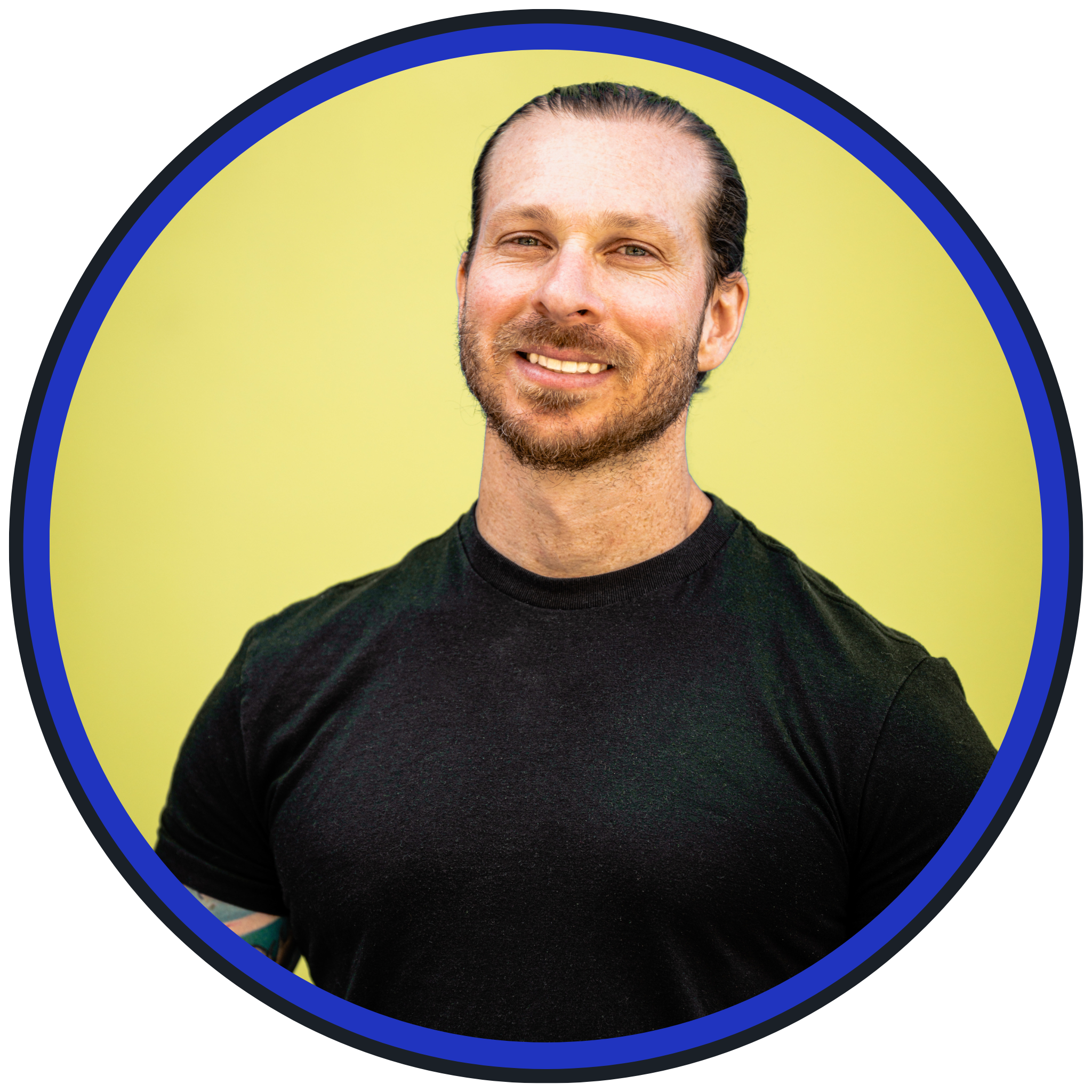
Who Is Jason Meland?
I am a value creator, mentor, and entrepreneur. I help online coaches master their messaging, attract dream clients, and build thriving high profit, high impact businesses.
When You’re Ready, Here’s How I Can Help You:
Grab a copy for the 5 posts responsible for 7 figures in online fitness sales: https://www.indemandcoach.com/5-posts-ebook-2505
Join the waitlist to get an invite to join the Client Attraction Accelerator https://www.indemandcoach.com/in-demand-waitlist
Work with me personally 1:1 to build a high profit, high impact online coaching business. DM me "mentorship" here for details
