
how to create content that sells (steal my 3-belief method)
How to Create High-Converting Content (and Blow Up Your Sales)
If you wanna be able to create content that actually drives more sales, there’s something you need to understand:
More information is usually not the answer.
Because if you’re already creating content, people are consuming it, maybe you’re even getting interest in what you do, but you’re not creating consistent or predictable buyers from it, there’s a good chance you’re falling into what I call the friend zone of content.
People might like you, follow you, and even view you as an authority.
But you’re not yet in what I call the thought leader zone—where you’re shifting perspectives, changing beliefs, and helping people see their problem differently.
And that matters because buyers are created through belief shifts.
Not just information.
Not just tips.
Not just “value.”
You can give somebody 47 tips on how to lose weight, grow a business, or get more leads. But if those tips never change how they think about the problem, the possibility of solving it, or why you are the person to help them, you’re mostly becoming a free source of information.
Useful? Sure. But useful does not always equal persuasive.
And persuasive content is what gets people reaching out in the DMs, opting into your funnels, booking consultations, and showing up to sales calls already bought into what you believe.
So I wanna break down the three beliefs you need to start infusing into your everyday content if you wanna create more buyers.
But before we get there, we have to start with the meta step underneath all of them.
The Problem With “Helpful” Content
It’s no secret that we’re living in the AI era right now.
People can create decent, mediocre content within minutes.
Our feeds are filled with what I would call AI slop.
Generic posts. Surface-level information. Five tips for this. Seven steps for that. The same recycled advice said 300 different ways.
And look, I’ve fallen victim to this too. AI can absolutely be used as a tool. The problem is when the content becomes so generic it could have been written for anybody.
Because when you’re talking to everybody, you’re usually connecting deeply with nobody.
So before we ever think about shifting beliefs, we need to get very clear on who we’re actually talking to.
That brings us to what I call the identity gap.
The Identity Gap: Where High-Converting Messaging Starts
A lot of people start by thinking about their niche.
In my opinion and from my experience, that’s where a lot of people go wrong.
Instead of thinking broadly about a niche, start thinking about a sub-niche.
A niche might be:
Helping moms lose weight.
A sub-niche might be:
Helping moms 35+ lose stubborn weight through a hormonal protocol.
See the difference?
We’re getting more specific to a certain person, a certain problem, and potentially a unique methodology.
Now go deeper.
Forget the whole niche for a second.
Think about one person who represents your dream client.
And ask yourself:
What is going on inside their head right now?
What is their struggle story?
What are they complaining about to their spouse, friends, coworkers, or themselves?
What symptoms are showing up that make them actively seek a solution?
If we use weight loss as an example, maybe it’s belly fat. Maybe it’s low energy. Maybe if they’re a guy, their testosterone is dropping.
Those are the external symptoms.
But we wanna go deeper.
What do they believe about why they have the problem?
Do they believe their genetics are bad?
Do they think they’re too old?
Do they believe they’re not disciplined?
Do they think they’re just not a good business owner?
Do they think social media doesn’t work anymore?
What is happening inside their head that is creating the reality they have right now?
The clearer you get on this, the easier it becomes to create content that moves somebody into a new belief.
What Does Their Desired Reality Actually Look Like?
Now look at the opposing side.
What do they actually want?
What would they be singing praises about?
What would they feel proud of accomplishing?
What specific result would make them say:
“This worked.”
And get specific.
Not:
“They wanna lose weight.”
Not:
“They wanna build a six-figure business.”
What is the result in the language they would actually use?
Maybe they wanna wake up with energy again, finally see their abs, open Instagram to three inbound DMs asking about their coaching, or consistently hit $20K months without every month feeling like a roller coaster.
Then go another layer deeper.
How do they wanna feel?
Proud? Confident? Accomplished? Relieved? In control?
This is the identity gap.
On one side, you have their current reality and the beliefs creating it.
On the other side, you have their desired reality and the beliefs they need to adopt to get there.
Your content sits in the middle of that gap.
Your job is to help move them from one side to the other.
Beliefs Create Behavior
Let’s make this really simple.
Imagine somebody is struggling to lose weight and they believe:
“My genetics are just crap.”
Because they believe that, they think:
“No matter what I do, I’m probably not gonna be able to lose this weight.”
So they feel hopeless.
They may still try things, but what are they likely to try?
Cheap diets. Random fads. Yo-yo diets. Little workout trends.
Why?
Because if they don’t truly believe they can solve the problem, why would they invest heavily in solving it?
So they take low-commitment actions.
Those actions don’t solve the underlying problem.
They lose some weight, gain it back, and that result reinforces the original belief:
“See? I knew my genetics were bad.”
But imagine we change the belief.
Imagine we get them to believe:
“It doesn’t matter if my genetics aren’t ideal. If I optimize my hormones and metabolism, I can still lose weight.”
Now their thought changes:
“Okay… how do I optimize my hormones?”
Now they feel more hopeful.
Maybe they research hormone optimization.
Maybe they get labs done.
Maybe they reach out to a health coach.
Their actions change.
Their results change.
Their reality changes.
All because the belief changed first.
That is what your marketing needs to do.
And there are three beliefs you need to focus on.
Belief #1: The Problem Belief
The first belief is the problem belief.
Your prospect needs to believe the problem is real, important, and worth fixing now.
But a lot of times, the problem they think they have is not the actual problem.
They think the problem is A.
You know the problem is B.
Your content needs to bridge that gap.
Let’s say you help business owners get more clients.
Your prospect says:
“I need more leads.”
So they chase more leads.
They post more. Try another funnel. Maybe run ads.
But let’s say this person already has 3,000 Instagram followers.
You might look at it and say:
“You don’t actually have a lead problem. You already have people paying attention to you. The problem is your messaging.”
They’re not saying the right words in the right way to get those people to raise their hands.
So the old belief is:
“I need more leads.”
The new belief is:
“I need better messaging so the leads I already have turn into conversations and sales.”
That one shift changes everything because now they stop trying to solve the wrong problem.
Another example:
Someone trying to lose weight might say:
“I just need to find a better diet.”
And your belief might be:
“You don’t need another diet. You need to learn how to eat right for your body and lifestyle.”
Again:
What they think the problem is → what you know the problem actually is.
Ask yourself:
What does my ideal client blame right now?
Then ask:
What do I know is actually causing the problem?
That gap is where some of your best content ideas live.
Belief #2: The Possibility Belief
The second belief is the possibility belief.
Your prospect needs to believe:
“This can actually work for somebody like me.”
With their age.
Their experience.
Their schedule.
Their audience.
Their past failures.
Their specific circumstances.
This belief is absolutely crucial.
If you’ve ever been on a sales call and heard:
“I need to think about it.”
Or:
“I need to talk to my spouse.”
A lot of times, this belief has not been fully shifted.
They may understand your offer.
They may even believe you know what you’re doing.
But there’s still a voice in their head saying:
“Yeah… but will it work for me?”
That’s fear of failure.
That’s doubt.
That’s hesitation.
So we need to find the belief creating the doubt.
Going back to weight loss, somebody might say:
“I’m in my 40s now. My genetics are shot. This is just the way life is gonna be.”
Your content can give them a different belief:
“It’s not that you’re over 40 and doomed. You may need to optimize your hormones, metabolism, nutrition, and training.”
Now there is a path.
There is hope.
In business, somebody might say:
“I’ve been trying to grow this thing for years. Maybe I’m just not a good business owner.”
And I might say:
“You may have simply never learned the meta skill underneath almost all of your marketing and sales: communicating in a way that creates buyers.”
Because if you learn how to communicate in a way that gets buyers, everything starts working better:
Your content
Your ads
Your DMs
Your sales calls
Your webinars
Your follow-up
You’re fixing the underlying principle underneath all of it: your messaging and communication.
You’re helping them think:
“Maybe I’m not incapable of getting the result. Maybe I’ve just been solving this the wrong way.”
That is the possibility belief.
Belief #3: The Person Belief
The third belief is the person belief.
They need to believe:
You are the right person to help them.
Your process or method is the right path to the result.
And this matters more than ever.
People talk about a “trust recession” online.
I don’t know that I believe that phrase 100%, but there is truth underneath it.
People are more skeptical, especially in coaching.
The barrier to entry got incredibly low. Anybody could call themselves a coach and start selling something.
I think a lot of the really bad coaches have been weeded out, but people still have trust issues.
So it is not enough to say:
“I can help you.”
You have to give them a reason to believe it.
And the way you do that without constantly beating your chest is through proof mechanisms.
The Five Proof Mechanisms That Shift Beliefs
There are a lot of ways to shift beliefs, but these five have been tried, proven, and battle-tested for me over years of content and sales calls.
Think of them as vehicles for moving somebody from belief A to belief B.
Proof Mechanism #1: Your Personal Story
Your personal story can work for almost any belief, but it is especially powerful for helping people buy into you and your process.
The key is getting specific and multi-sensory.
Most people tell stories in the most boring, dry, generic way possible:
“I used to struggle in business, then I figured out messaging, and things got better.”
Okay.
Technically, that’s a story.
But there’s nothing there.
When I tell the story of one of my first real breakthroughs in business, I talk about the actual situation.
I was running my online fitness business and getting okay results.
I’d have what felt like a big month at the time—maybe $20K.
Then $8K.
Then $12K.
Then $22K.
It was all over the place.
And I was stressed.
I had a family to take care of. I had employees. And honestly, those bigger unpredictable months felt more stressful than just doing a consistent $10K because I never knew what to expect.
I was even considering throwing in the towel.
Then one of my mentors, who was in a completely different industry, showed me an organic campaign he was running.
He got me focused on dialing in my messaging.
He basically told me:
“Get people focused on one big idea. Come up with a good hook. Give them a strong call to action. Use the campaign to drive them to a live training or masterclass. Follow this formula.”
So I did.
I think I got around 14 inbound DMs at first.
Over the next week, it became more than 100.
I ran the live campaign.
And over roughly three weeks, I generated more than $33,000 in cash—something like $33,300 and change.
It was my biggest month at the time.
And I thought:
“Maybe this is a fluke.”
So I ran it again the next month.
Very similar results. I think I did around $26,000 and change.
And I remember thinking:
“Whoa.”
That eventually became the basis of what I call a conversion content campaign.
Notice what the story does.
I’m not just telling you “messaging matters.”
I’m showing you why I believe messaging matters.
And if you relate to the struggle, naturally you start wondering:
“What messaging did he use?”
Or:
“What is a conversion content campaign?”
That’s what a strong personal story does.
It creates belief and curiosity at the same time.
Proof Mechanism #2: Client Stories
The second mechanism is a client story.
Client stories are especially powerful for the possibility belief and the person/process belief because people wanna know:
“Has somebody like me done this?”
Let’s say you’re a weight-loss coach and you have a client named Mary.
Mary thought her genetics were shot.
She thought this was just the way life was gonna be.
She tried X. She tried Y. She tried Z.
Nothing worked.
Instead of just saying:
“Mary lost 22 pounds!”
Tell what was actually going on in her head.
Lay out the doubts, frustrations, and failed attempts your ideal client is experiencing too.
Then explain what Mary changed, what she did differently, and how she got the result.
Now your prospect is thinking:
“That sounds exactly like me.”
And then:
“If it worked for Mary, maybe it can work for me.”
That is how the story shifts the belief.
Proof Mechanism #3: Relatable Analogies and Metaphors
The third proof mechanism is a relatable analogy or metaphor.
And the important word is relatable.
Don’t use some obscure story your audience has no idea about.
Don’t be like:
“Back in 1912, there was a dude named Robert L. Chocoboat…”
Nobody knows what the hell you’re talking about.
Use something they instantly understand.
When I was in weight loss, I used to explain under-eating like this:
“Imagine going to the gas station, putting $5 of gas in your car, and then trying to go on a 10-mile road trip. What do you think is gonna happen?”
People immediately get the concept.
Or if I’m explaining why messaging matters, I might say:
“Imagine going to China. You only speak English. You’re trying to order food, but the other person only understands Mandarin. You may think you’re saying the right words, but they don’t understand you.”
Then I connect it back:
“That’s what a lot of people are doing in their content.”
They think they’re saying the right thing.
But the market is not hearing what they think they’re communicating.
Now the person goes:
“Ohhh. I get it.”
That little moment of understanding is a belief shift.
Proof Mechanism #4: Borrowed Credibility
The fourth mechanism is borrowed credibility.
If somebody in your industry or space is already viewed as an authority by your ideal clients, you can reference them when their idea supports the point you’re making.
I’ve done this with people like Alex Hormozi, Russell Brunson, Jay Abraham, and other marketers and experts.
If Alex Hormozi makes a point about the “dream outcome,” and it aligns with what I’m teaching, I can use that language and connect it back to my point.
You’re not pretending their credibility is yours.
You’re reinforcing a principle with somebody your audience already recognizes and respects.
This can come from an expert, author, creator, researcher, or known figure in your space.
Proof Mechanism #5: Real-World Examples
The fifth mechanism is a real-world example.
This can often come from outside your industry.
For example, if I’m teaching positioning and messaging, I could talk about Steve Jobs.
Steve Jobs didn’t just explain product features.
He crafted presentations that sold the idea, the identity, and the belief around Apple.
He made people want to become part of what the product represented.
That becomes an outside example that helps prove the principle.
Your audience already knows Apple.
They already know the outcome.
So the example gives them another way to understand why your idea matters.
How to Turn This Into Better Content Immediately
So let’s pull all of this together.
If you wanna create content that actually converts, stop asking only:
“What information should I share today?”
Start asking:
“What belief does my ideal client need to shift today?”
That is a completely different question.
First, get clear on the identity gap.
Who is the person?
Where are they now?
What are they thinking?
What are they struggling with?
What do they blame?
What do they want?
What would they need to believe to move toward that new reality?
Then pick one of the three beliefs:
1. Problem Belief
What do they think the problem is, and what do you know the problem actually is?
2. Possibility Belief
What doubt makes them think the result won’t work for them, and what do they need to believe instead?
3. Person Belief
Why should they believe you are the right person, with the right process, to help them get there?
Then choose one proof mechanism:
Your personal story
A client story
A relatable analogy or metaphor
Borrowed credibility
A real-world example
That gives you the structure for the content.
And notice how different this is from:
“Here are five ways to get more leads.”
There’s nothing inherently wrong with information content.
But if every post is tips and information, you run the risk of becoming commoditized.
People save your posts.
They like your posts.
They learn from you.
And then they go buy from somebody else.
What I want you to do instead is create content that makes people think differently.
Because when somebody thinks differently after consuming your content, they see their problem differently.
When they see the problem differently, they start looking for a different solution.
And if you introduced that new way of seeing the problem, who naturally becomes associated with the solution?
You.
That is the thought leader zone.
You’re not just informing.
You’re leading the thinking.
A Simple Challenge for Your Next Piece of Content
Here’s what I want you to do.
In the very next piece of content you create—whether it’s a long-form YouTube video, a short-form reel, an email, a caption, a post, or even a live training—choose one belief.
Not all three.
One.
Then choose one proof mechanism.
Build the content around shifting that belief.
Maybe you shift the problem belief with an analogy, the possibility belief with a client story, or the person belief through your own story.
One belief.
One mechanism.
One piece of content.
Start there.
Because once you begin thinking this way, you stop staring at the screen asking:
“What should I post?”
And you start asking a much more useful question:
“What does my prospect need to believe before buying?”
That is how you create content that does more than get consumed.
That is how you create content that moves people, creates demand, and makes your marketing do more of the selling before somebody ever gets on a sales call with you.
Your message matters now more than it ever has before.
Don’t be afraid to speak it.
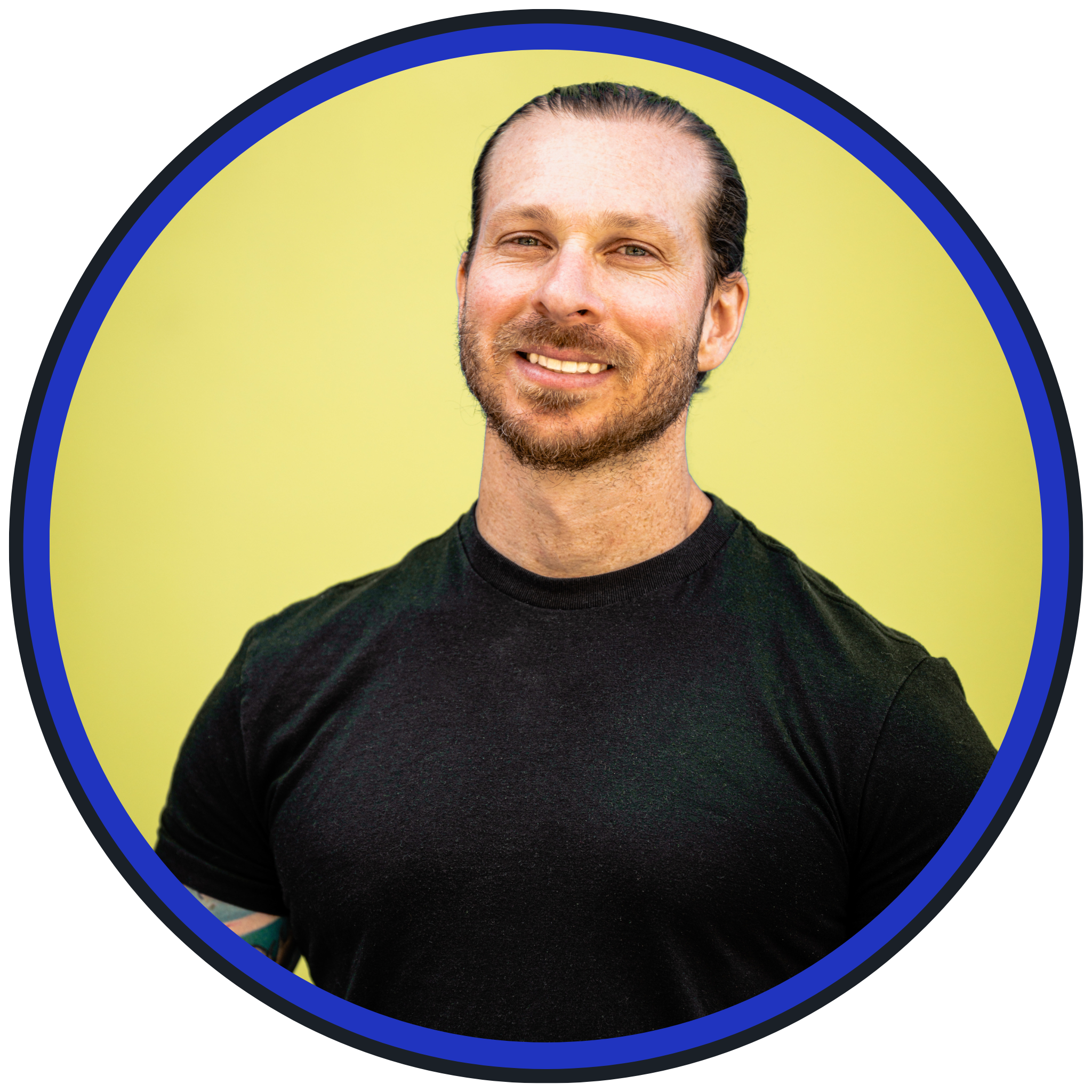
Who Is Jason Meland?
I am a value creator, mentor, and entrepreneur. I help online coaches master their messaging, attract dream clients, and build thriving high profit, high impact businesses.
When You’re Ready, Here’s How I Can Help You:
Grab a copy for the 5 posts responsible for 7 figures in online fitness sales: https://www.indemandcoach.com/5-posts-ebook-2505
Join the waitlist to get an invite to join the Client Attraction Accelerator https://www.indemandcoach.com/in-demand-waitlist
Work with me personally 1:1 to build a high profit, high impact online coaching business. DM me "mentorship" here for details
